

The McCoy lab seeks to understand the impacts of germline and somatic genetic variation on genome function, phenotypes, and fitness through the development and application of computational and statistical methods. Our work combines diverse datasets and concepts from population and complex trait genetics to achieve quantitative perspectives on human evolution, reproduction, and development.
Human Evolution
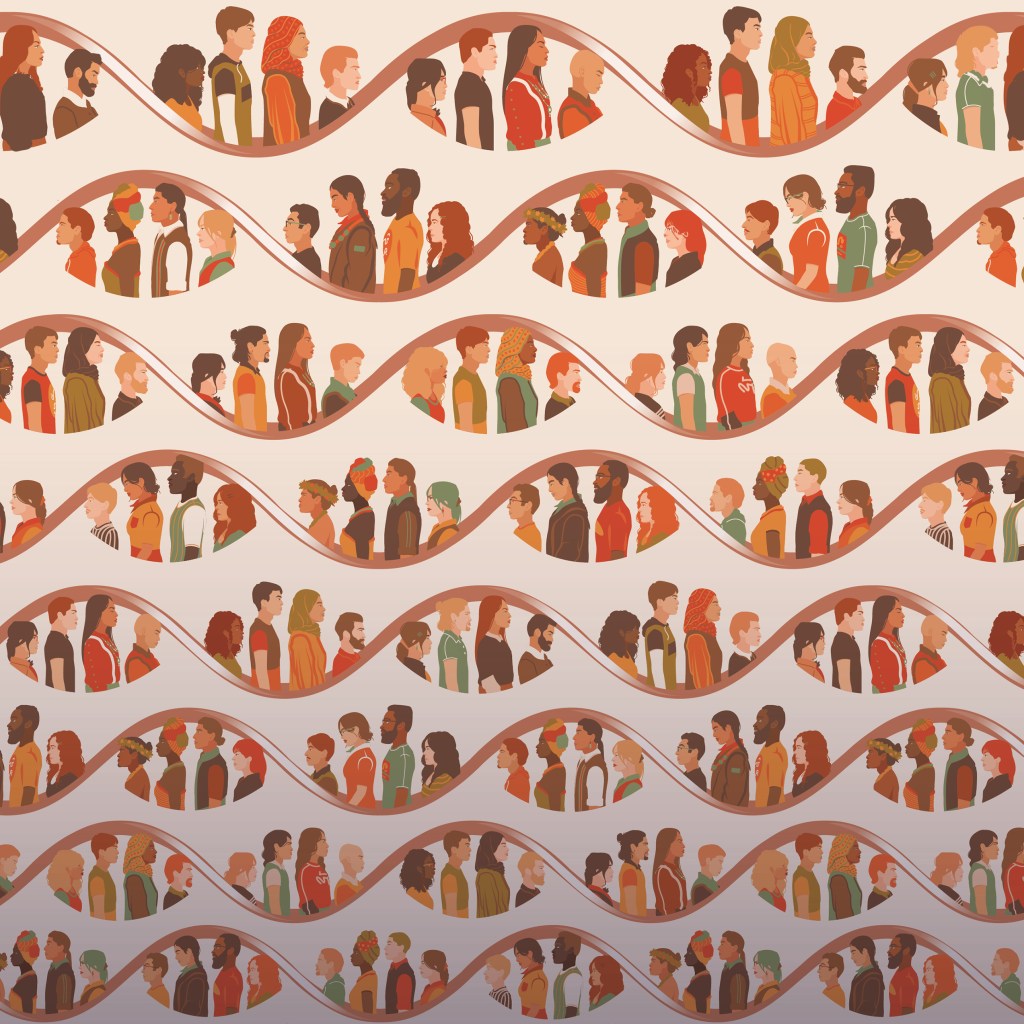
Patterns of variation in DNA sequences record the evolutionary events that have shaped our genomes. Our work on human evolution highlights the role of variation within complex and repetitive regions of the genome, which have only recently become accessible through advances in sequencing technologies and computational methods. By expanding genomic datasets to diverse human populations, we aim to understand the distribution, genetic basis, and evolution of genome function at high resolution.
Click on the research themes below to read more.
Uncovering sources of functional genomic diversity
Non-coding, regulatory variation influencing gene expression and splicing is the primary source of phenotypic variation within and between species. Historically, human genomic datasets have been biased toward participants of European ancestries, hindering knowledge of the diversity and evolution of human gene expression. To address this gap, our lab generated an open-access RNA-seq data set from cell lines from 731 individuals from the 1000 Genomes Project, spread evenly across 5 continental groups and 26 populations (Taylor et al., 2024). By intersecting these data with published genome sequencing data from the same individuals, we mapped genetic variation associated with gene expression and splicing (eQTLs and sQTLs, respectively) at high resolution. These included thousands of eQTLs and sQTLs that were private or locally enriched within underrepresented (e.g., East Asian, South Asian, and Admixed American) populations. One notable finding was that when allowing for multiple causal variants for a given gene, genetic effects on expression are remarkably consistent across people of different ancestries. This result is encouraging for precision medicine applications because it means that genetic research findings in humans may be more portable between populations than previously appreciated.
Revealing hidden signatures of past evolutionary events
To date, population geneticists have primarily focused on patterns of variation in single nucleotide variants (SNVs) and short indels due to their ease of discovery by short-read sequencing. Large insertions, deletions, and inversions—collectively termed structural variants (SVs)—are increasingly recognized as abundant and impactful contributors to human traits, yet their role in human adaptation remains less well characterized. My lab recently addressed this gap in knowledge by using a graph-based method to accurately genotype SVs in a cohort of 2504 globally diverse individuals. This revealed numerous SV loci with extreme signatures of allele frequency differentiation—a potential signature of positive selection. The most extreme example traced to a constant domain of the immunoglobulin locus, whereby an insertion allele that is rare in most populations achieved very high frequencies in certain regions of southeast Asia. Moreover, we observed evidence that the putative adaptive allele was introgressed into modern humans via ancient interbreeding with Neanderthals, ~50,000 years ago. This observation indicates that archaic alleles provided a reservoir of functional variation that proved beneficial to populations migrating into southeast Asia 1700-8400 years ago. Our findings motivate our future research to uncover functional variation and signatures of important evolutionary events hidden within poorly resolved regions of the genome.
Developing genomic resources to empower the field
Over the last two years, my lab made major contributions to the analysis of the first complete human genome assembly (T2T-CHM13), which includes the previously unresolved centromeric satellite arrays and the short arms of all five acrocentric chromosomes, as well as the first assembly of a complete human Y chromosome. In this work as part of the Telomere-to-Telomere (T2T) Consortium, we demonstrated that the new reference offers universal improvements in the analysis of human genetic variation in globally diverse populations. Together, our work highlights variation of evolutionary and biomedical importance within genomic regions inaccessible to previous studies.
Human Reproduction and Development
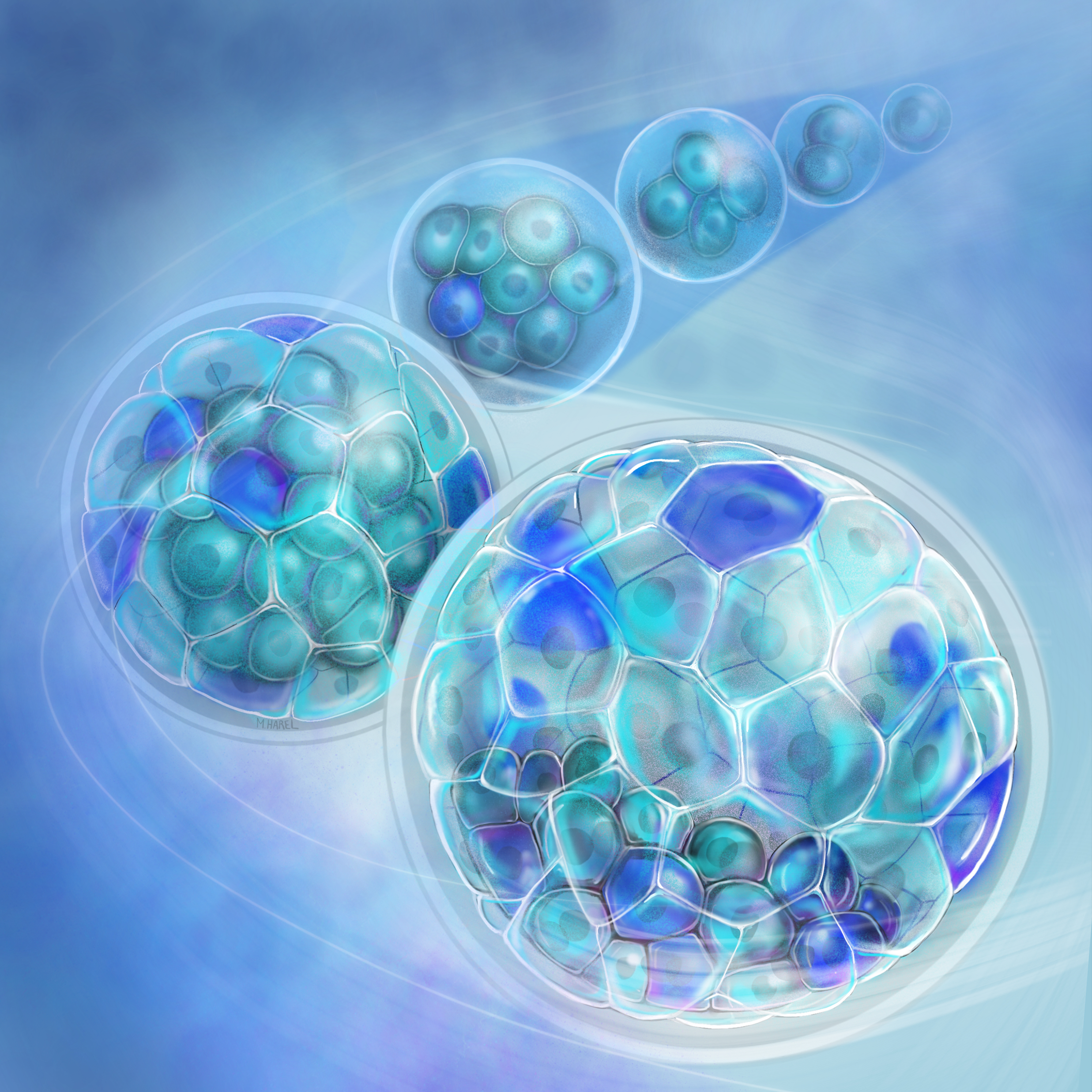
Pregnancy loss is common in humans, with fewer than half of all conceptions surviving to birth. Much of this loss is driven by severe genetic errors that arise early in development. Our research seeks to understand why these errors occur and how natural selection acts during the earliest stages of human life. We study how inherited genetic variation and the process of chromosome exchange during egg and sperm formation influence the risk of embryonic aneuploidy, the leading cause of miscarriage. We also extend these evolutionary approaches to other developmental systems, including sperm production and blood formation, where selection can act among cells within the body to shape traits and contribute to diseases such as cancer.
Click on the research themes below to read more.
Understanding the genetic basis of human aneuploidy
Extra or missing chromosomes—a phenomenon termed “aneuploidy”—is the leading cause of human pregnancy loss. Our past work demonstrated that a common maternal-effect allele of the mitotic regulator Polo-like kinase 4 (PLK4) is associated with incidence of lethal mosaic aneuploidy driven by multipolar cell divisions (McCoy et al., 2015). Over recent years, our lab’s research has demonstrated that in addition to maternal-origin aneuploidy arising during egg formation (meiosis), severe mosaic forms of aneuploidy frequently arise during the initial embryonic cell divisions (mitosis) and cause embryos to arrest before implantation (McCoy et al., 2023). Meanwhile, low-level mosaic aneuploidies are tolerated in blastocyst-stage embryos and may represent a normal physiologic feature of human preimplantation development. Unfortunately, diagnostic signatures of meiotic and mitotic aneuploidy are obscured by the fact that conventional preimplantation genetic testing is based on extremely low coverage whole-genome sequencing (<0.1x), such that genotype information is disregarded. Motivated by principles of population genetics, my lab developed a method to overcome this limitation by leveraging external haplotype reference panels (Ariad et al., 2021). Our method can accurately distinguish trisomies of meiotic and mitotic origin, facilitate mapping of meiotic crossovers, as well as reveal hidden abnormalities in genome-wide ploidy that evade detection by conventional methods and result in miscarriage (Ariad et al., 2024). Together, our discoveries have improved fundamental understanding of the prevalence, causes, and fitness consequences of diverse forms of aneuploidy.
Achieving an embryo-wide view of mosaic aneuploidy
A central focus of our lab has been to apply principles of statistical genetics to overcome limitations of current genetic testing approaches and improve understanding of the origins of aneuploidies. One such limitation of preimplantation genetic testing is its reliance on data from biopsies of one or few trophectoderm cells of blastocyst-stage embryos, which may not reflect the fetal lineages of the embryo or predict pregnancy success. This has contributed to intense debate about the frequency of chromosomal mosaicism in embryos and its consequences for development. Single-cell genomic data promise a more comprehensive view of meiotic and mitotic aneuploidy but pose many statistical challenges including data sparsity, multiple hypothesis testing, and non-independence. In the first publication from the lab, we developed a novel statistical approach to address these challenges and quantify aneuploidy in published single cell RNA-seq data from 74 human preimplantation embryos (Starostik et al., 2020). Our work revealed evidence that low-level mitotic aneuploidies are very common among preimplantation embryos and may reflect a normal state of human development. We further observed that the incidence of mosaic aneuploidy declines over time in the inner cell mass relative to the trophectoderm, consistent with intra-embryonic natural selection during post-implantation development. More recently, we have extended a simulation-based framework called approximate Bayesian computation to build on these conclusions, inferring rates of both meiotic and mitotic error that are most consistent with published biopsy-based data (Yang et al., 2024 [preprint]).
Testing evolutionary hypotheses about spermatogenesis and clonal hematopoiesis
Beyond embryos, we are now extending our work studying natural selection in other developmental systems such as spermatogenesis (Carioscia et al., 2022) and hematopoiesis (DeBoy et al., 2023). The latter includes a collaboration with the Armanios lab at the Johns Hopkins School of Medicine, where we applied phylogenetic methods to high-coverage DNA sequencing from single-cell-derived blood clones to reconstruct the history of somatic evolution in patients with long telomere syndromes. Based on these data, we found that patients with germline loss-of-function mutations that lengthen telomeres experience elevated somatic mutations burdens and clonality within their blood, driving increased risk for diverse forms of cancer with aging. These findings suggest a broader role of telomeres in limiting propagation of somatic driver mutations—a hypothesis that we will further test during the next funding period toward a generalizable model of the interplay between telomere dynamics and clonal evolution.
Illustration credits: Adara Koivula (Figure 1) and Maayan Harel (Figure 1 & 2)
 McCoy Lab